Dental practices rely on technology more than most businesses realize. From scheduling and imaging to treatment planning and billing, nearly every part of the practice runs through your systems. So when something slows down, even slightly, it doesn’t just create inconvenience. It impacts production. NOVA recently had the pleasure of joining The Drill Down, a […]
Dental practices rely on technology more than most businesses realize. From scheduling and imaging to treatment planning and billing, nearly every part of the practice runs through your systems. So when something slows down, even slightly, it doesn’t just create inconvenience. It impacts production.
NOVA recently had the pleasure of joining The Drill Down, a podcast series by the Dental Integrators Association (DIA), alongside other leading dental IT companies. The discussion focused on how IT providers are using AI internally – not in theory, but in real, day-to-day operations.
And while the conversation centered on IT providers, the implications for dental practices are significant. Take a look below…
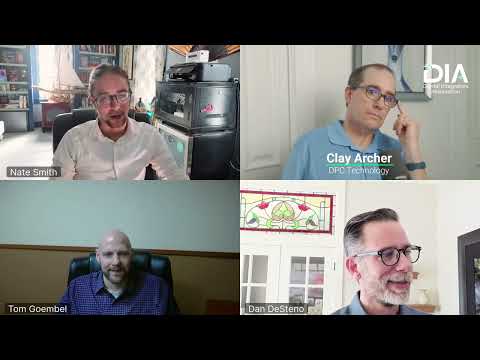
One of the biggest takeaways from the episode was how AI is being used behind the scenes within dental IT companies. Not for hype, but for operational improvements. Across the discussion, several consistent themes came up:
On the surface, these may sound like internal improvements. But in dental IT, internal efficiency directly impacts the experience of the practice.
Dental practices are not typical office environments. They are real-time production settings where technology is directly tied to patient care and revenue. If systems go down or slow down, the impact is immediate. Even a short outage can result in thousands of dollars in lost production – and in multi-location practices, that number can climb quickly.
That’s why speed, consistency, and proactive support matter more in dental than in many other industries.
When IT providers improve how they operate internally, dental practices feel that difference in very real ways. As a leading dental IT services provider, NOVA Computer Solutions takes preventing system downtime seriously. Take a look at our dental IT downtime calculator to see what it typically costs.
One of the more important (and often overlooked) points from the conversation is how AI is helping IT providers move beyond reactive support. Traditionally, IT has been ticket-driven. Something breaks, a ticket is submitted, and it gets resolved. But that model has limits.
What AI is enabling – and what leading dental IT companies are starting to adopt – is pattern recognition. The ability to identify recurring issues, detect early warning signs, and address problems before they escalate. Because in dental environments, the warning signs of dental IT problems are often there:
These are not isolated annoyances. They are early indicators of deeper infrastructure issues that can eventually lead to downtime. The shift isn’t just about resolving tickets faster. It’s about reducing how many tickets need to exist in the first place.
There’s an important nuance in all of this. AI doesn’t fix disorganized IT environments. If internal processes are inconsistent, documentation is incomplete, and infrastructure isn’t properly understood, adding AI into the mix doesn’t create efficiency. It amplifies the problems.
This is where structure matters.
When NOVA onboards a new dental practice, the focus is not immediate optimization – it’s stabilization.
That includes:
From there, the first 30 days are spent correcting issues, standardizing systems, and building a stable foundation. Only with that level of clarity and consistency can tools like AI actually deliver meaningful improvements. Read more about our dental IT onboarding process.
Most dental practices aren’t thinking about how their IT provider manages internal workflows. But they experience the results every day. When a dental IT company operates efficiently and proactively, it shows up as:
And as AI continues to evolve, the gap between providers who operate this way and those who don’t will only get wider.
The conversation in The Drill Down wasn’t about replacing people with AI or chasing the latest trend. It was about improving how dental IT companies operate so they can better support the practices that depend on them. AI is simply a tool. The real differentiator is how it’s applied and whether the foundation is strong enough to support it.
For dental practices, that difference is felt in uptime, performance, and ultimately, the ability to deliver care without disruption. If you haven’t already, make sure you’re subscribed to the DIA’s youtube channel and follow along for more podcast episodes.